Posted by Holly Brady under Book Marketing
Sometimes it’s best to hear the truth from writers in the trenches.
Here’s a guest post from Marcia Kemp Sterling, who’s just self-published her first novel. She came to one of my Stanford classes looking for advice on her book project. Since she launched, she’s had good success getting her book noticed. Here’s how she did it…
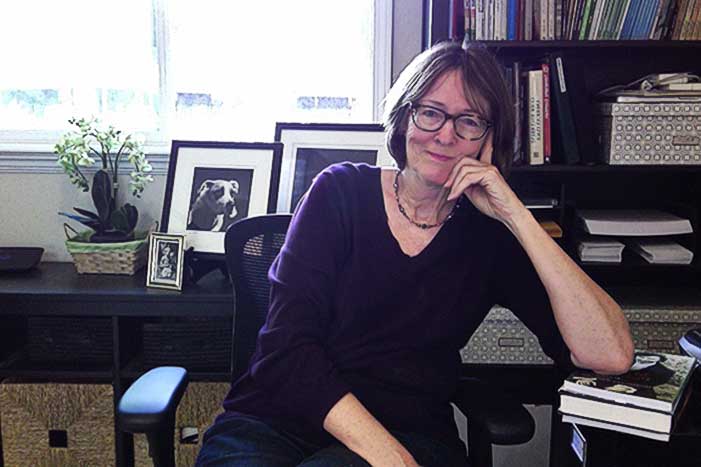
Guest Blog by Marcia Kemp Sterling, author of One Summer in Arkansas
Most of us writers hate being told that we must pry ourselves away from the computer and go out into the world to promote ourselves and our work.
But in today’s market for books, whether you are self-published or not, your story is not likely to be read outside your own circle of friends and family without a heavy investment of sweat equity.
The industry is in upheaval. Publishers, bookstores and agents are struggling to survive. Except for Amazon and a handful of lucky “winner takes all” established writers, nobody is making money. Although virtually anybody can publish a book (whether they can put together a sentence or not), there are no longer effective mechanisms to separate the wheat from the chaff.
You’ve written a book you’re proud of and you want it to be read. What is a modest, scholarly, introverted writer to do?
Website and Blog: Invest upfront in an appealing website and learn how to write a blog. Trust me, there are plenty of bloggers who can’t write and it’s a natural platform for anyone who can. I have become a regular blogger and continue to work at getting followers and putting up notices on Facebook and Twitter when I post a new blog.
Network: In an Internet-connected world with traditional channels for books weakened, you need to tap into networks of friends, old business colleagues, relatives and new contacts to create momentum for your book. I formed a new book publicity company and hired daughters-in-law, nieces and young adult children of friends to help me. Each of them worked their connections to bloggers, to regional contacts where the book might attract interest, to people-who-knew-people. I posted notices about any new book happenings on LinkedIn, Facebook, Twitter and my website, always featuring images of the cover. The publicity girls would pick up my postings and repeat them on their own social media sites.
Amazon: Most books today are purchased from Amazon and you have to understand their system, develop an effective Amazon presence, get help to activate search engine key words, solicit reviews and guide people there through your website or otherwise. Their system rewards success with success.
Distribution and Warehousing: Even if you keep a stock of books to sell directly, you need a distributor for a chance at placement in bookstores and libraries. They keep a portion of the profit, but it’s worth it.
Events: The formula for arranging events is straightforward. Bookstores are struggling to make a profit and you have to both (i) make it easy for them and (ii) essentially guarantee you can turn out 30 or more people for the event. For that reason, you should work on venues in locations where you have personal contacts who will help. Local advertising (cheap in small local papers) brings a double benefit: it gets people out to the event and publicizes the book to others who may not show up but may go to Amazon and purchase anyway.
Giveways: If you care about readers, you need plenty of books to give away – to bookstores, to reviewers, to influencers, to bloggers, through Goodreads, etc.
This sounds daunting, but do not despair. I am not a “people person” and have never been even remotely entrepreneurial. But I am finding a good deal of personal satisfaction in building a business from scratch and am deeply gratified to be getting positive feedback from readers.
For a look at an excellent example of an author website–the one Marcia built to promote her book–click here.
Posted by Holly Brady under Book Marketing
Below is a terrific summary
of practical things you can do to make your book more visible on Amazon.
It comes from the enewsletter of Smith Publicity, Inc. Kudos to Book Publicist Jennifer Tucker who put together the list.  1. Author Central
Think of Author Central as your “main hub” in the wide world that is Amazon. Beyond creating an author page, which will educate customers about you and your book and display essential information about your biography, blog posts, etc., you can also use Kindle Direct Publishing (KDP) to set up your book for the Kindle if you own electronic rights. Also through Author Central, you can track book sales numbers across the U.S. for the past four weeks to identify sales trends, utilize the CreateSpace platform to publish your next book, and explore Kindle Direct Publishing Select, which will allow you to earn higher royalties. 2. Amazon Forums
Amazon offers a variety of discussion forums for authors, which can help you to network with other authors and expose your book to a new audience interested in your genre. You can also learn just by reading other posters’ questions, advice, answers, tips and tools. Feel free to reach out to other authors (who are often avid readers themselves) to ask for feedback on your book, to position yourself as an expert in your field, and to just have fun! 3. Amazon Keyword Tags
By using the tagging feature, you can make your book more searchable almost immediately, if done correctly. Check out tags on other books (especially top selling titles!) in your book’s genre and make your own tags accordingly. The more keywords you have tagged, the better readers will be able to find your book within a slew of other books. Fun tip – think like a reader: what keywords would you use to search your book? Also, changing tags each week or every few weeks gets your book in front of new audiences. 4. Amazon’s Listmania!
Listmania! is another tool that authors can utilize to reach potential book buyers. Listmania positions your book among other books in your genre by adding your book to book lists, but word to the wise: for best results, make sure to be very selective and true to your book’s genre when choosing your lists. 5. Amazon’s “Search Inside the Book”
Just as book excerpts draw readers in, Amazon’s “Search Inside the Book” feature allows readers to flip through some of your book, with the goal of making them want to read more. This feature also works to prevent negative comments because by previewing the book, the reader has a better understanding of your book’s content. Be sure to have your personal Amazon page set up before you move forward with this tool, as it can take time to be approved by Amazon. 6. Amazon Marketplace
Amazon Marketplace serves as a third-party online storefront where you can sell your book alongside the array of other Amazon goods. While it’s a great tool and can offer you more freedom as an author (you can choose to give autographed copies of the book, for instance), authors must be willing to carry a book inventory and must have this inventory already on hand to be set up in the Marketplace. It also requires plenty of time and patience for authors to manage their own online book sales, though many authors enjoy the control that they have over the price of their book and fulfillment of book orders. 7. Amazon “So you’d like to…” Guide
With the Amazon “So you’d like to…” guide, you can actually build a guide around your book topic, genre, or specialty, which will position you as the expert of your book or field. This free tool allows you to think outside the box when it comes to book promotion and gives you the option to include your book with other Amazon products, essentially creating a “bundle” of items relating to the “So you’d like to…” Guide topic. Authors can choose to write content about the subject and, within the content, mention that the book is for sale on Amazon.
Posted by Holly Brady under Book Marketing
Last week during my Stanford workshop on self-publishing, guest speaker Guy Kawasaki was asked whether he had purchased any ads for his new book on self-publishing APE: Author, Publisher, Entrepreneur–How to Publish a Book.
“Not one,” he said.
So how did he receive over 50 Amazon reviews in the first day of launch?
“Simple. I involved my followers from the beginning. I asked their opinion on the outline. I asked their opinion on the manuscript. And I even asked for volunteers to help copyedit the book.
“And so…when we went to launch, all I did was let my followers know. Many of them were invested enough in the project that they went to Amazon and reviewed the book on Day One.”
The result: over 50 4- and 5-star reviews. Of course, it helps that it’s a great book. Check it out here:
APE: Author, Publisher, Entrepreneur-How to Publish a Book
Posted by Holly Brady under Book Marketing
One of the best blogposts of the past year came from GalleyCat. The folks there mined the Kindle discussion boards to compile a list of sites that post ebooks (and some print-on-demand books) free. Well worth a look. Check it out HERE.
To that list I’d have to add Goodreads, which has an entire program for authors who are looking to promote their books. You can review it HERE.
Marketing is by far the knottiest part of the self-publishing process. Nice to know that options are increasing.
If you know of others, do share them through a comment here. We’ll all benefit.
Posted by Holly Brady under Uncategorized

The Entrepreneurial Writer: How To Self-Publish a Book Using Today’s New Media Tools
Saturday, January 26 10am – 4pm
Once again I’ll be teaching a workshop on self-publishing through Stanford University’s Continuing Studies program.
The workshop is for anyone who wants a clear overview of how to use new media tools to publish fiction and nonfiction books. Space is limited.
For more information, click here.
Posted by Holly Brady under Self Publishing
One of the biggest mistakes I see in self-published print books (like those created on CreateSpace) is in the choice of typefaces. They’re either too common or too weird.
Since most wordsmiths are design-challenged, I asked one of the best art directors in New York–Ina Saltz, author of the excellent Typography Essentials–for her short-list of favorites for the books she designs. Here are her recommendations:
Good serif fonts (for the body of the book) Hoefler Text Sabon Garamond (not ITC Garamond) Century (not Century Gothic) Minion Pro Georgia
Good sans serif fonts (used sparingly for contrast) Trade Gothic, Franklin Gothic News Gothic Myriad Helvetica Neue
And the worst choices? According to Ina, “Comic Sans and Papyrus are probably the two most reviled fonts on the planet. I could go into great length about why but they should just not be used, period.”
If you want to see the array of typefaces available in the market today, check out MyFonts. It’s a nicely designed site where you can easily purchase fonts you don’t already have on your computer.
Oh, and one more thing: if you’re working on an ebook, it doesn’t matter which font you choose because the reader has control of the fonts and font sizes in your book. So pick something vanilla and use it throughout: Times New Roman is fine–12 point for body copy and 14 point for chapter openers.
Posted by Holly Brady under Self Publishing
If you don’t think fonts matter, take a look at the article in Friday’s New York Times. Errol Morris describes the informal experiment of a university student who found that he could raise his grade average just by doing one thing: changing his essay font.
“[The student] had written 52 essays in total. Eleven were set in Times New Roman, 18 in Trebuchet MS, and the remaining 23 in Georgia. The Times New Roman papers earned an average grade of A-, but the Trebuchet papers could only muster a B-. And the Georgia essays? A solid A.”
Intrigued, Morris created his own experiment. He tested 45,000 readers’ perceptions of the “truth” of a passage when presented in one of six randomly assigned fonts—Baskerville, Computer Modern, Georgia, Helvetica, Comic Sans and Trebuchet.
Turns out, if you want your writing to emit an aura of truthiness, Baskerville is your font. Who knew?
Posted by Holly Brady under Traditional Publishing
Folks who came through Stanford Publishing Course will remember Helen Gurley Brown, the editor of Cosmopolitan, who gave such memorable talks about her rise to the top of the New York publishing world—alongside her husband, film producer David Brown (Jaws, The Sting, Driving Miss Daisy). Helen died today at the age of 90.
 photo by Rod Searcey
Helen was full of both bravado and anxiety. And she was willing to show you both. That was her charm.
Here’s a little story that captures her quirkiness better than any I can remember.
When I took over the Stanford Publishing Course in 1994, David Brown was already a veteran speaker who taught participants how to turn a book into a Hollywood film. But Helen did not accompany him on his trips to campus. Turns out she had come to Stanford in the early ‘70s, at the height of the Women’s Movement, and given a talk. Because she stood for women who put their men first, she received a not-altogether-gracious reception from Stanford women. She never forgot the experience.
Then one spring day in 1999, David left me a voicemail about the logistics of his upcoming PubCourse talk, adding–offhandedly–that his wife would be accompanying him on his trip to campus.
What?!
I immediately called him back, and asked him if she would consider speaking, too. “I don’t know,” he said. “Why don’t you ask her yourself.”
When I reached Helen, she was reticent, dodgy, anxious. Finally, she said, “I don’t think I want to speak, but if you can find somebody to interview me, I’ll do that. ” Bingo.
Getting someone with enough weight to interview Helen on stage was a challenge. PubCourse director Paul Saffo came up with the best idea: Katrina Heron, the young-turk editor-in-chief of Wired would surely know how to engineer a provocative conversation with Helen. And she would herself be a coup to have onstage.
And so we set it up.
About three weeks from the start of the Course, Helen called. “Who is it that will be interviewing me?” she asked. I reminded her. “Okay. Sounds good,” she said.
Several days later, she called again. “I don’t think I need to be interviewed,” she said. “I’ll just talk.” I couldn’t set Katrina adrift, so I convinced Helen that the current plan was a better one. “Okay,” she said, this time with more reticence.
She called several more times with the same concern, and I continued to push for the interview format.
Finally, the evening of the interview came. Katrina and Helen were positioned on a stage set with two leather armchairs. Saffo made the intros. The moment he finished, Helen sprang from her chair, strode to the front of the stage, and started talking. She told stories about how she had risen from secretary to top editor at Cosmo, how she’d met and “snagged” her famous husband, what good sex they had (even now), and how any “girl” could have it all. Katrina, with enormous grace, simply sat there.
Paul started poking me. “Do something,” he whispered. But what could I do? We were witnessing Helen—in full “on” mode.
Finally, she paused and took a deep breath. Then she turned, sat down, and said to Katrina, “Now let’s talk.”
In those twenty minutes, Helen displayed and dispelled much of the anxiety she had harbored about speaking at Stanford. And when she had done so, she engaged with Katrina in a memorable conversation about what it takes to be an editor-in-chief at a top New York magazine.
I’ll miss Helen’s bravado. And her vulnerability.
Posted by Holly Brady under The Writing Life
 Erik Larson
I’m a huge fan of Erik Larson. Devil in White City kept me spellbound–in part because I grew up near Chicago and my great-grandfather lived less than six blocks from the serial killer in that book. Wish I could write like that.
I’m also a big fan of Nora Ephron, whose career I tracked for decades because she spoke so well for a generation of young women writers entering the workforce with new expectations of their own capabilities. How I envied her early columns for Esquire!
 Nora Ephron in 1975
And so it amused me to find a recent post by Erik Larson on Goodreads where he pays tribute to Ephron, and tells his own story of author-envy. Gives me heart. And hope.
Posted by Holly Brady under Traditional Publishing
If I remember correctly, it was Seth Godin who said that your book is nothing more than a souvenir of your relationship with your readers.
Sounds right to me. Especially when you see the energy created by the authors who signed at Book Expo in New York last week. (photos © Rod Searcey)
 Daniel Handler (aka Lemony Snicket) pulled a card at random to see who would get a bountiful basket of Snicket surprises. The winner, much to the chagrin of the booksellers crowded around him, was a lawyer. Daniel’s audiobook Who Could That Be At This Hour? (Hachette Audio) comes out in October.  Rockers Neil Young and Patti Smith reminisce for the crowd. Neil’s memoir Waging Heavy Peace is out in October. Published by Blue Rider Press.  James Patterson signed his teen detective story Confessions of a Murder Suspect. Publisher is Little, Brown.  Gillian Flynn’s new psychological thriller is Gone Girl, published by Crown.  M.T. Anderson signs the paperback version of his 2004 novel Feed, a futuristic book that was a finalist for the National Book Award and winner of the L.A. Times Book Prize for Young Adult Fiction. Published by Perfection Learning.
And these were only a handful. The three-day New York literary fest, which took place at Javits Convention Center, featured dozens of authors, including:
Barbara Kingsolver Junot Diaz Stephen Colbert Michael Chabon Zadie Smith Jon Meacham Molly Ringwold Dan Rather Kirstie Alley Jimmy Fallon R.L. Stine and …
And for the first time ever, the show floor was open to all booklovers on the last day of the Expo. Worth a look next year.
|
About this site This is a site for authors and publishing professionals who are exploring the use of new media tools to produce books and ebooks. Our goal is to raise self-publishing to the level of artisanal publishing.
|